

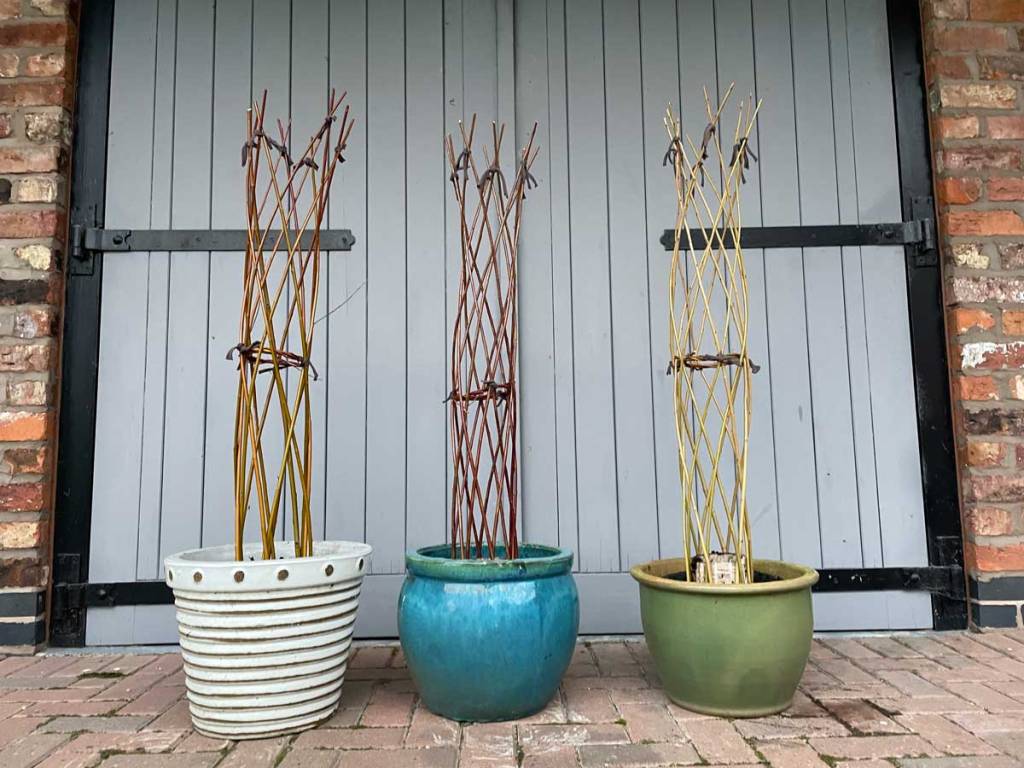
There is something magical about taking a pile of sticks and turning them into a plaited trunk for a harlequin tree. Especially when the sticks have come from a home-grown willow bed!
We planted the willow bed during our first winter at the farm, in a corner of the lawn that was always too boggy to mow without getting stuck in the mud. We have some underground springs throughout our garden and this patch on a slight downhill slope seemed to be where some of the water puddled, regardless of the weather.
Our hope was that the damp patch would stay wet enough all year round to keep the willow growing without drying out. In fact it is so wet, that even a couple of the willow stools have apparently rotted – although some varieties are prone to disease, so that could be another cause of the problem.
However, most of the willow bed is very happy to grow there and every year it yields more and more rods. I chose basketry varieties so the rods are beautifully tall and thin, although some have stouter butts than others.
January is the best time to harvest the willow, when last year’s leaves have dropped off and before the new year’s leaf shoots start appearing. Because they need to be planted as soon as possible after being cut, I can’t delay this workshop until the warmer climes of spring or summer, so our hardy harlequin tree makers needed to brave the cold weather!
However, it’s a time of year when most of the garden stands still and shorter days can stunt creative inspiration, so this is a really lovely activity to get your crafting juices flowing and produce something that will continue to give joy for years to come.
For the harlequin trees we selected from Flanders Red, Green Dicks and White Welsh.
In spring and summer they will sprout leafy canopies and the sticks will thicken up and meld together as the years go on.
These workshops can’t take place again now until next January so they really are a special annual activity and a great creative start to the New Year!
 sargiesmess.co.uk
Leave a comment